
FM Consulting
Cross-Channel Escalation Triage Program
Reduced escalation backlog by introducing a shared triage operating model across support, product, and engineering.
Case study
The problem
A B2B SaaS support organization handled roughly 40,000 tickets a quarter across three separate intake channels — live chat, email, and issues raised directly to account managers — each triaged independently by whoever picked it up first. The same underlying incident routinely entered through more than one channel: a customer would message support in chat, email a follow-up an hour later, and mention it to their account manager the next day, and each touchpoint got triaged, prioritized, and often promised a fix timeline as if it were a new issue. There was no shared definition of severity either — "urgent" in chat and "urgent" from an account manager didn't mean the same backlog position, and engineers were frequently pulled in through direct Slack messages that bypassed the ticket queue entirely, creating a shadow backlog leadership couldn't see. By the time this was reviewed, roughly one in six tickets reaching engineering turned out to be a duplicate of one already being worked, and high-severity backlog age had crept past two weeks.
The solution
Every escalation, regardless of which channel it started in, now becomes exactly one ticket in one queue, severity-scored against a single shared rubric tied to customer impact rather than to which channel raised it. A daily fifteen-minute cross-functional triage — support lead, product, and the on-call engineer — reviews everything new against the existing backlog for likely duplicates (same account, overlapping symptoms, overlapping time window) and links rather than silently closes them, so the full contact history stays visible while the actual engineering work gets tracked once. Direct Slack-message escalations to engineers were explicitly closed off: an engineering lead now declines untracked requests and redirects them into the shared queue, so "no ticket, no work" became the enforced norm rather than a guideline.
How it was built
Account managers no longer raise issues by email or Slack — a short form embedded directly in the CRM opens a real ticket in the same Zendesk queue chat and email already used, so there's exactly one intake system instead of three. A dedicated "linked ticket" relationship, not a duplicate-and-close pattern, lets the triage sync merge the underlying work while preserving each channel's own contact thread for the customer relationship. Jira automation opens a linked engineering ticket only once the daily triage explicitly confirms engineering involvement is needed, which removed the reflexive habit of escalating to engineering before support had even ruled out a known issue. A queue-health dashboard — backlog age by severity, duplicate-match rate, and ticket volume by origin channel — reviewed weekly by leadership surfaced a pattern nobody had named before: account-manager-raised issues were resolving roughly three times slower than chat or email, not because they were harder, but because they'd never been routed into a real queue at all until this program existed. Within two quarters, high-severity backlog age fell from over two weeks to under four days, and the duplicate-triage rate dropped from about one in six tickets to near zero.
More projects
- AI
- Customer Experience
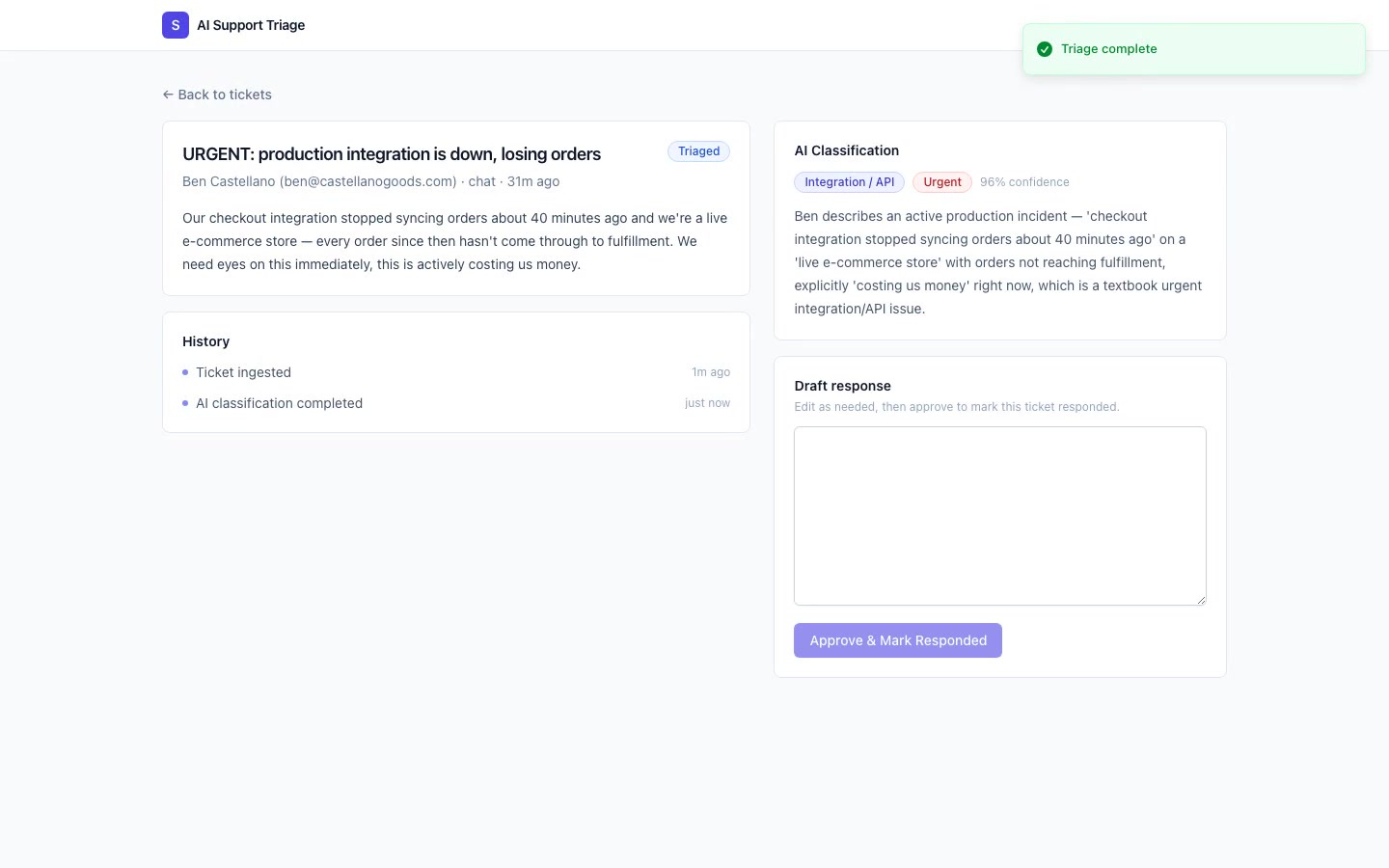
AI Support Workflow Optimization
A platform-agnostic AI triage layer for support teams — connects to Zendesk, Salesforce, or any ticketing system, classifying tickets and drafting ready-to-send responses with a human review step before anything goes out.
- Customer Experience
- Platform
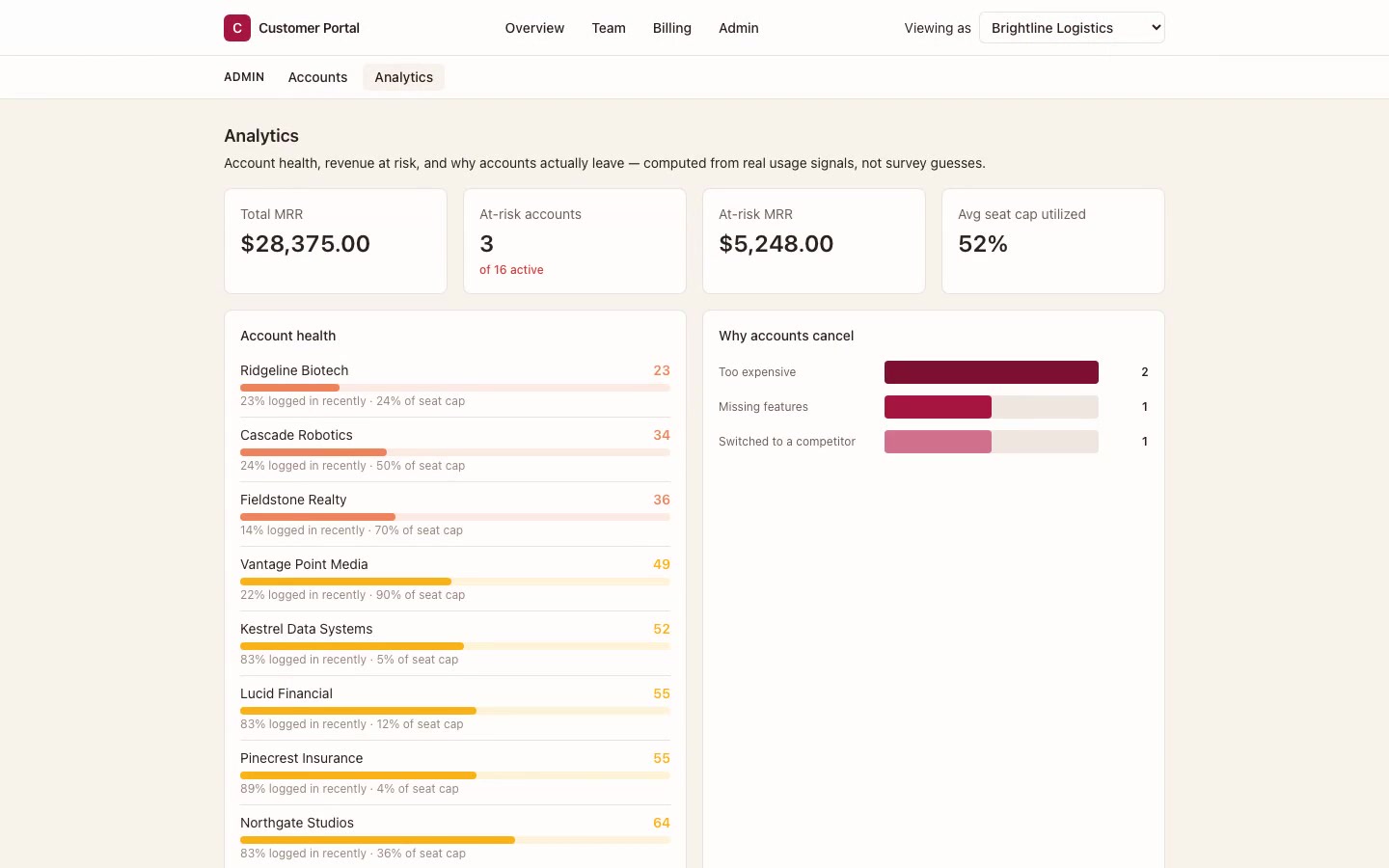
Customer Portal Improvement Program
A self-service account portal for team, plan, and billing management — paired with an internal account-health view that scores churn risk from real usage data, not guesswork.
- Transformation
- Operations
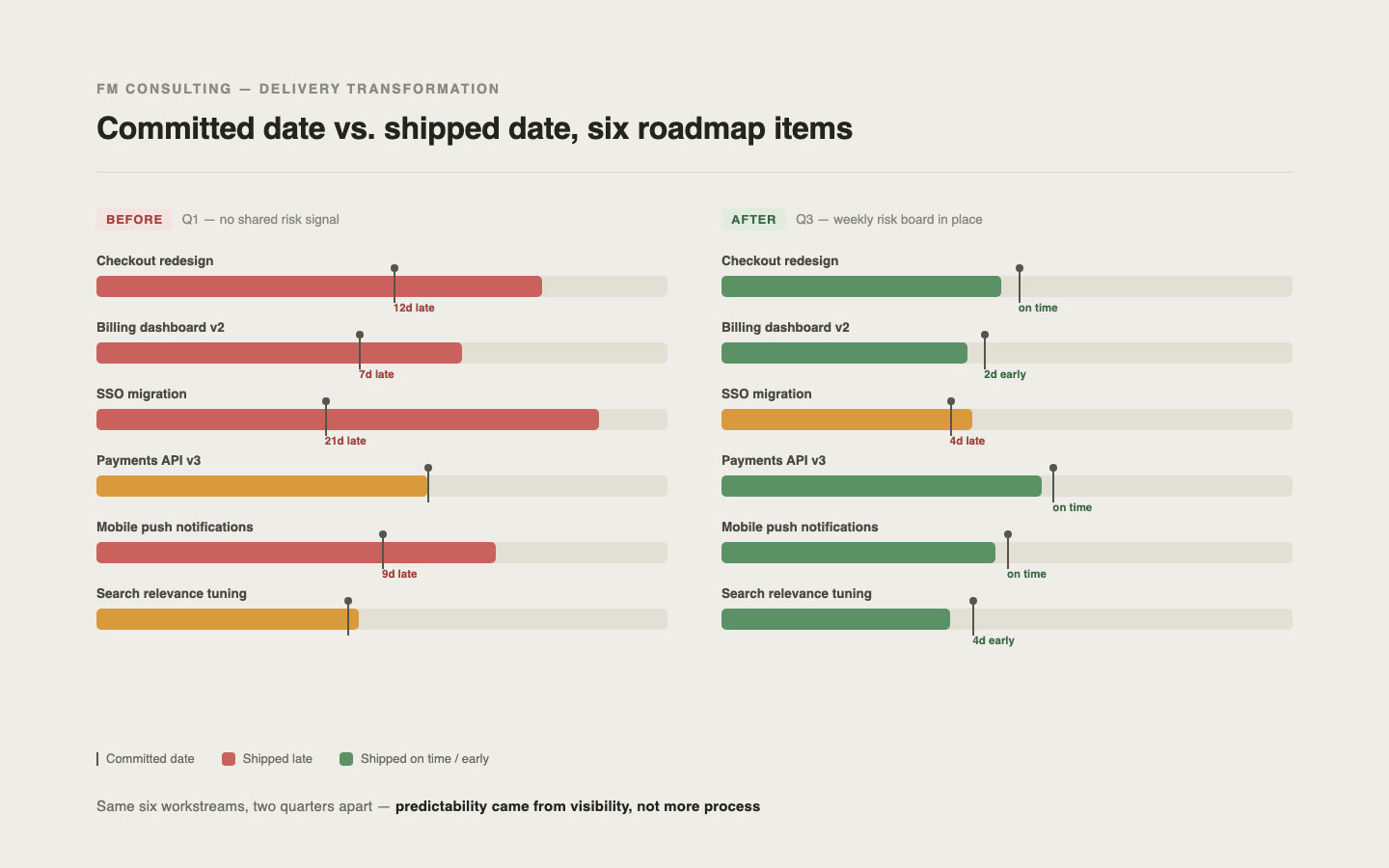
Delivery Process Transformation
Brought structure and reliability to a multi-team delivery environment by improving ownership, planning, and stakeholder visibility.