
FM Consulting
Program Increment Planning Reset
Re-established delivery momentum by restructuring planning cycles around capacity, dependencies, and outcomes.
Case study
The problem
Quarterly planning ran as a single exhausting multi-day event where five teams each built a backlog-based plan largely on their own, discovering cross-team dependencies out loud in the room rather than in advance. Commitments were sized against raw headcount, with no accounting for on-call rotations, support load, or approved time off, so on average teams walked out committed to roughly a third more work than they actually had capacity for. By the third week of most quarters the plan had drifted far enough from reality that teams quietly stopped referencing it, and the next quarter's planning started over rather than learning from what had actually happened.
The solution
Rebuilt planning around three anchors decided before the room convened, not during it. Capacity was counted as available hours minus known overhead — on-call, support rotation, approved time off — rather than raw headcount, so a commitment started from a realistic number instead of an optimistic one. A pre-planning dependency survey, completed by each team a week ahead and consolidated into one shared map before planning began, meant cross-team conflicts were resolved on paper days earlier instead of live in the room. Outcomes were framed as three to five named objectives per team instead of a full backlog, so a quarter's success could be judged against a short, specific list rather than a percentage of tickets closed.
How it was built
The dependency survey and consolidated map were built in the team's existing planning tool rather than a new one, and the planning event itself was restructured from a discovery session into a working session — most hard cross-team conflicts were already flagged before anyone sat down, so the room's job was resolving them, not finding them. A single thirty-minute checkpoint at the quarter's midpoint checked actual progress against each team's objectives, rather than a full mid-quarter replan. Within two planning cycles, average committed work fell from roughly a third over capacity to consistently within it, and the mid-quarter checkpoint showed noticeably less drift from the original plan than either of the two prior quarters.
More projects
- Transformation
- Operations
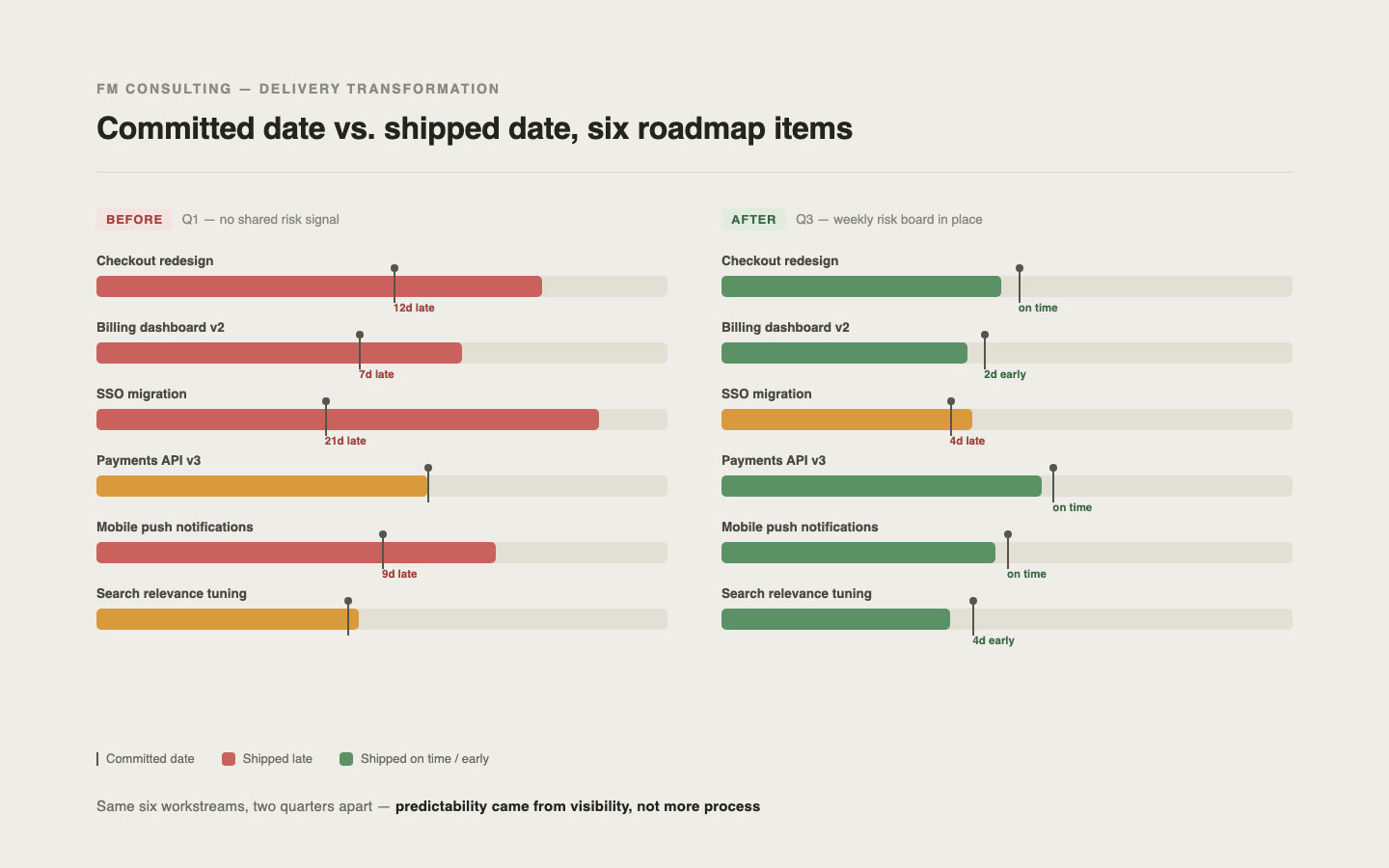
Delivery Process Transformation
Brought structure and reliability to a multi-team delivery environment by improving ownership, planning, and stakeholder visibility.
- Transformation
- Operations
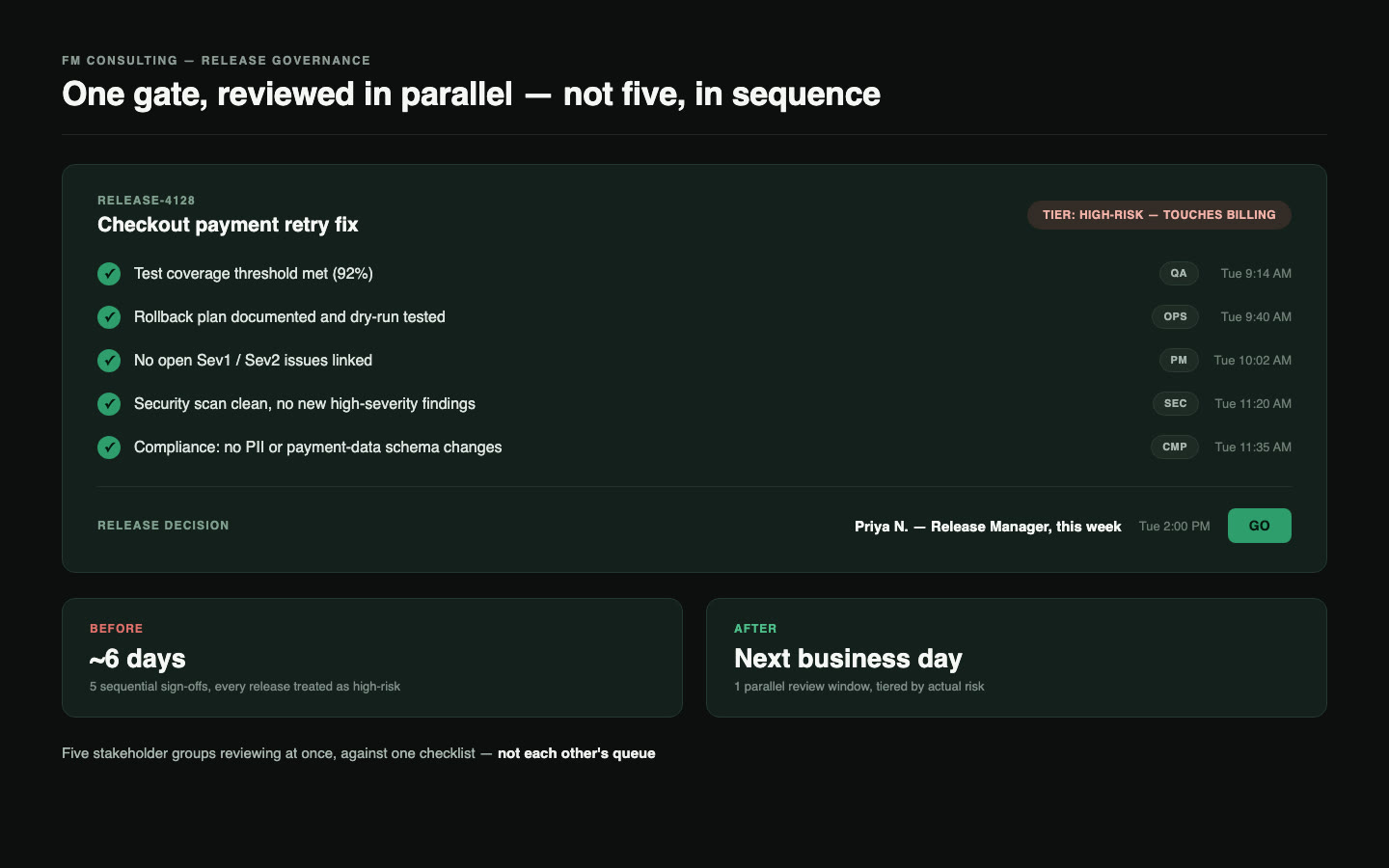
Release Governance Acceleration Initiative
Improved release predictability by standardizing readiness gates, ownership, and cross-team decision flow.
- Operations
- Customer Experience
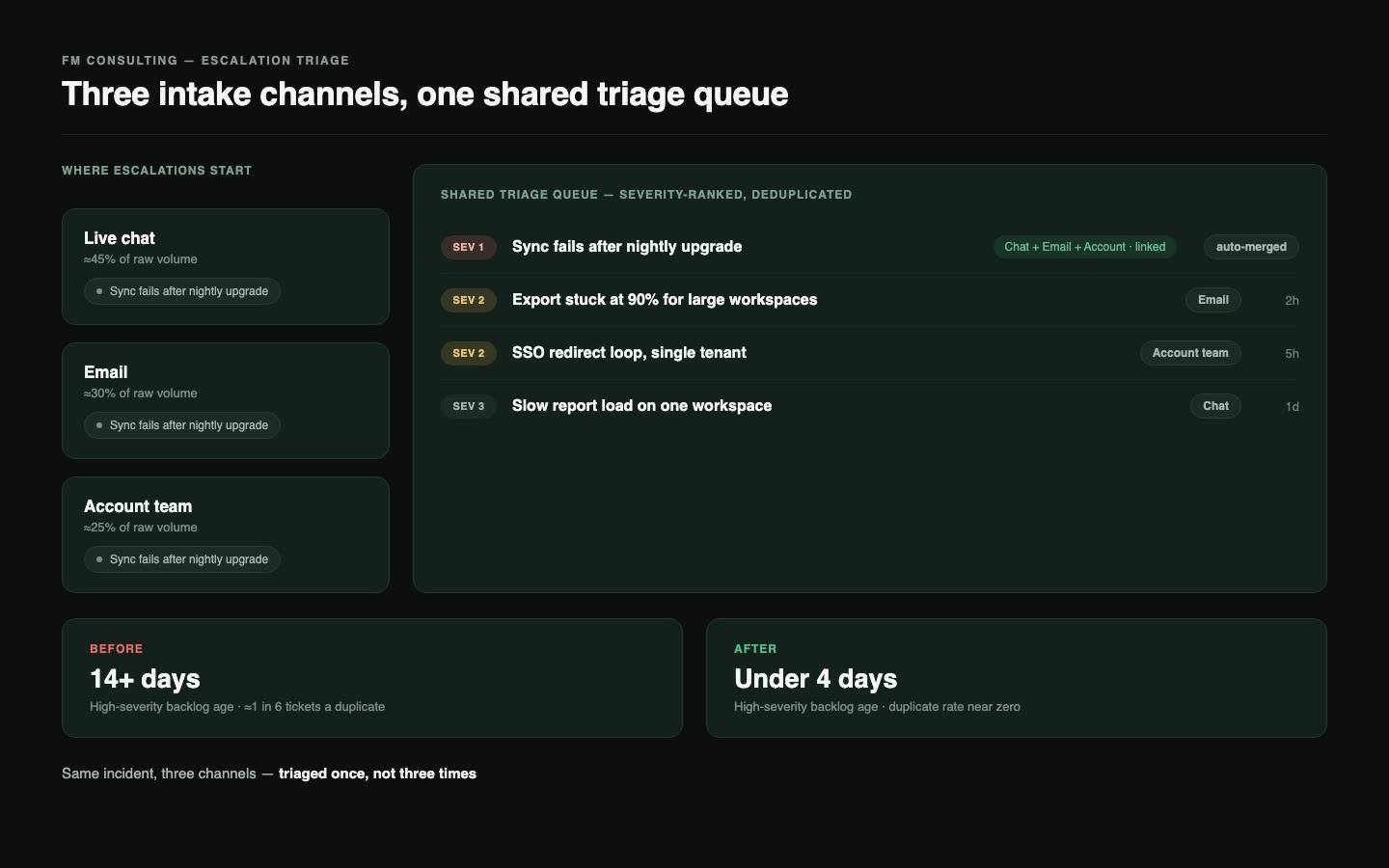
Cross-Channel Escalation Triage Program
Reduced escalation backlog by introducing a shared triage operating model across support, product, and engineering.